
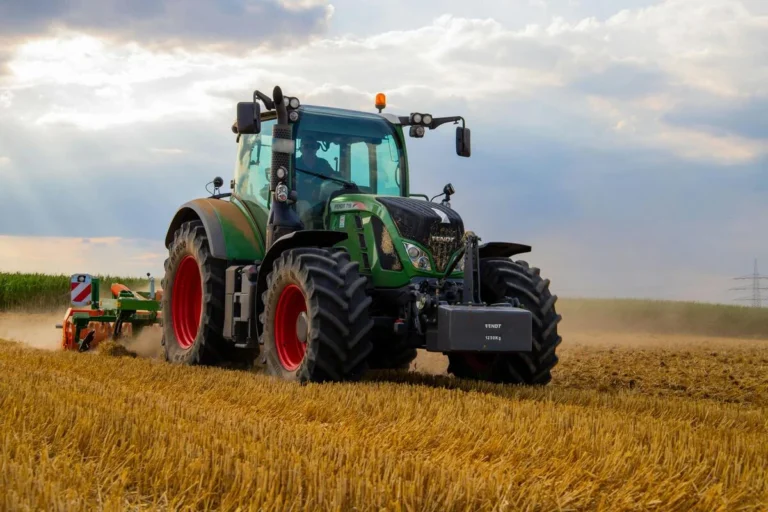

R&D Tax Credits for Agriculture

Agricultural businesses are under increasing pressure to improve yields, reduce costs, adapt to environmental change and meet new regulatory demands. From precision farming and crop innovation to livestock health, automation, sustainable fertiliser use and controlled-environment growing, many farms and agricultural suppliers are solving complex technical problems every day.

Where your business is developing new methods, improving existing processes or overcoming uncertainty in how crops, livestock, machinery, data or growing systems perform, you may be carrying out qualifying R&D. InnoFund helps agricultural businesses identify eligible activity, prepare compliant R&D Tax Credit claims and explore wider innovation incentives such as grants, Patent Box, Capital Allowances and R&D strategy support.

Why Us

Innovation in Agriculture

Agriculture is one of the UK’s most important innovation sectors. Farmers, growers and agricultural suppliers are having to respond to rising input costs, labour shortages, changing weather patterns, soil degradation, carbon reduction targets and the need to produce more with less.

Innovation in agriculture can take many forms. It may involve developing more resilient crops, reducing fertiliser or pesticide use, improving animal health, using sensors and data to monitor conditions, trialling new growing systems, automating manual processes or creating more sustainable ways to manage land, water and waste.

This includes work across:

  • Crop resilience and performance
  • Fertiliser and pesticide reduction
  • Soil health and nutrient management
  • Livestock health and welfare
  • Precision farming systems
  • Sensors and farm data
  • Automation and robotics
  • Controlled-environment growing
  • Hydroponic and vertical farming
  • Water conservation
  • Waste-to-value systems
  • Sustainable land management

Qualifying R&D can arise where a business is not simply applying known methods, but is testing, adapting or developing new approaches because the technical answer is uncertain.

InnoFund advisers supporting UK businesses with agriculture R&D tax relief - InnoFund - R&D Tax & Innovation Funding
InnoFund technical consultant supporting compliant R&D tax relief claims - InnoFund - R&D Tax & Innovation Funding

Dr Malcom Sande

R&D Technical Consultant (Agriculture)

A note from Dr Malcom Sande

In Agriculture R&D tax relief claims, the details matter.

In agriculture, a strong R&D Tax Credit claim depends on understanding the science and technology behind the project. It is not enough to say that a farm improved yield, reduced waste or became more efficient. The claim needs to explain what technical uncertainty existed, why standard methods were not enough, and what work was carried out to try to resolve the problem.

That is where InnoFund adds value. We work with agricultural businesses to identify the genuine technical challenge behind the commercial outcome, whether that sits in crop performance, livestock health, soil management, automation, controlled-environment growing, data analysis, machinery, environmental sustainability or food production. This helps ensure the claim is accurate, evidence-led and prepared with the level of technical detail HMRC expects.

Qualifying R&D

How Agriculture Companies Can Qualify for R&D Tax Credits

In the agriculture sector, qualifying R&D can arise when a business is trying to achieve an advance in science or technology and has to overcome technical uncertainty to do so.

Developing new crop varieties or improving crop performance

Work may qualify where a business is testing new growing methods, breeding approaches or environmental conditions to improve yield, disease resistance, climate resilience or nutritional value. This is especially relevant where the outcome is uncertain and trials are needed to establish what works.

Reducing fertiliser, pesticide or chemical use

Agricultural R&D can arise where a business is trying to reduce reliance on inputs while maintaining or improving crop quality and yield. This may include testing alternative soil treatments, biological controls, precision application methods or new nutrient management systems.

Improving livestock health, breeding or productivity

Projects may qualify where a business is developing new approaches to animal health, feed efficiency, disease resistance, welfare, fertility or production quality. This could include trialling new feeding systems, monitoring tools, breeding programmes or disease prevention methods.

Developing automation, sensors or precision farming systems

Many agricultural businesses are investing in technology to monitor crops, soil, livestock, water use and machinery performance. R&D may arise where the business is developing or adapting sensors, robotics, data platforms, AI tools or automated systems to solve a technical problem.

Creating sustainable farming and waste-to-value systems

Qualifying work may include developing ways to reduce emissions, reuse farm waste, improve water conservation, generate renewable energy or convert by-products into useful outputs. This can include anaerobic digestion, bioenergy, composting, nutrient recovery or carbon reduction projects.

Developing controlled-environment, hydroponic or vertical farming systems

R&D may arise where a business is testing new approaches to lighting, irrigation, nutrient delivery, climate control, automation or crop density in controlled growing environments. These projects often involve uncertainty around how plants respond under new or optimised conditions.

Testimonials

What our clients have to say about InnoFund

  • Knowledgeable and easy to work with!

    We've worked with InnoFund for a few years now and it's been generally very positive. They've helped us with R&D claims and their knowledge and experience has been essential. Most of our contact has been with Ardy, Fatima and Libby who have been great. Highly recommended.

    DA
    David Aitken

  • Would recommend them to any company

    We have worked with InnoFund over the last few years to prepare & submit our R&D claim. They have guided us professionally through all stages of the process. I would recommend them to any company looking to secure R&D tax relief.

    G
    Gary

Non-Qualifying Work

Not Every Agricultural Project Qualifies for R&D Tax Credits.

Not every improvement, investment or efficiency gain will qualify for R&D Tax Credits. Routine farming activity, standard use of known equipment or normal commercial changes will usually fall outside the scheme.

Examples of work that may not qualify include:

  • Standard crop rotation
  • Routine machinery purchases
  • General farm maintenance
  • Normal use of fertilisers or pesticides
  • Standard livestock care
  • Commercial expansion
  • Basic software setup
  • Routine compliance work
  • Installing off-the-shelf systems

However, agricultural projects often contain a mixture of qualifying and non-qualifying activity. For example, buying a new monitoring system may not qualify on its own, but adapting it to work in unusual growing conditions or developing a new data-led process around it may involve qualifying R&D. The key question is whether the business faced technical uncertainty and had to carry out systematic work to resolve it.

Why Us

Eligible R&D Costs for Agriculture Businesses

Agricultural businesses may be able to claim relief on qualifying costs linked to eligible R&D projects, including:

  • Staff time spent on R&D activity
  • Employer National Insurance and pension contributions
  • Subcontracted R&D, depending on the contract and scheme rules
  • Externally provided workers
  • Software used for modelling, monitoring, analysis or testing
  • Cloud computing and data costs linked to qualifying R&D
  • Consumables used in trials, prototypes or testing
  • Materials used in experimental growing, feeding or production processes
  • Utilities directly linked to qualifying R&D activity

The treatment of consumables, subcontractors, trials and failed projects can be particularly important in agriculture claims. InnoFund helps identify which costs are eligible and ensures the claim is built around the qualifying technical work, not just the wider commercial project.

HMRC Risk Areas for Agriculture R&D Claims

HMRC is applying greater scrutiny to R&D Tax Credit claims, including claims from agriculture, farming and food production businesses. A strong claim must explain the technical uncertainty clearly and show why the work went beyond routine improvement.

Common risk areas include:

  • Claims based only on commercial benefits
  • Weak explanation of the scientific or technological advance
  • Routine farming activity presented as R&D
  • Poor records of trials, failures or iterations
  • Overclaiming standard machinery or equipment use
  • Unclear treatment of subcontracted work
  • Not separating qualifying and non-qualifying activity
  • Generic descriptions of sustainability or innovation
  • Lack of input from technical or scientific staff

Frequently Asked Questions

Can farms claim R&D Tax Credits?

Yes. Farms and agricultural businesses can claim R&D Tax Credits where they are seeking an advance in science or technology and have to overcome technical uncertainty. This may include work involving crops, livestock, soil, machinery, automation, growing systems, sustainability or food production.

Improving crop yield may qualify where the business has to test or develop new methods because the outcome is technically uncertain. Routine use of known methods is unlikely to qualify, but experimental work involving growing conditions, inputs, genetics, disease resistance or controlled environments may be eligible.

Yes. Livestock projects may qualify where they involve technical uncertainty around animal health, feed efficiency, disease resistance, breeding, welfare, productivity or monitoring. The key issue is whether the business had to investigate or develop a new technical approach.

Yes. Precision farming, sensors, robotics, AI and data-led monitoring can qualify where the business is developing, adapting or integrating technology to solve a technical problem. Standard purchase or installation of existing technology is unlikely to qualify on its own.

Yes. A project does not need to succeed to qualify. If the business carried out systematic work to resolve scientific or technological uncertainty, failed trials can still support an R&D claim.

Useful evidence can include trial records, crop data, livestock data, test results, photographs, technical notes, feeding or growing logs, soil analysis, sensor data, meeting notes, supplier correspondence, prototype records and explanations from the people involved in the technical work.

Other Innovation Funding Services

Take a look at what else our industry-leading innovation funding experts can do for your business.

Patent Box

Reduce Corporation Tax on profits from qualifying patented innovations.

Land Remediation

Claim tax relief for cleaning up contaminated or derelict land.

HMRC Enquiries

Specialist support to defend tax relief claims when HMRC raises questions.

Why Us

Don't guess.
Know for sure.

Got a project you want to discuss? InnoFund helps separate routine delivery from genuine R&D so that claims are accurate, compliant and properly evidenced. Speak to our innovation funding experts today.

£300M
Tax benefits secured for our clients
1%
HMRC enquiry rate
99%
HMRC enquiries defended in the last two years
InnoFund adviser supporting UK businesses with R&D tax relief and innovation funding - InnoFund - R&D Tax & Innovation Funding
Scroll to Top