



R&D Tax Credits for Automotive Companies

Automotive businesses are under constant pressure to improve performance, safety, efficiency, sustainability and reliability while adapting to new technologies, materials and regulatory demands. From electric vehicles and battery systems to lightweight materials, advanced manufacturing, autonomous features, emissions reduction and specialist components, many automotive companies are solving complex technical problems that may qualify for R&D Tax Credits.

Why Us

Innovation in Automotive

Innovation in the automotive sector often happens across design, engineering, testing, materials, manufacturing, software and production processes. Qualifying R&D may arise where a business is developing new products, improving existing components, overcoming technical uncertainty or creating better ways to manufacture, test, power, control or integrate vehicle systems.

This includes work across:

  • Electric vehicle technology
  • Battery systems
  • Lightweight materials
  • Emissions reduction
  • Advanced manufacturing
  • Vehicle safety systems
  • Autonomous features
  • Motorsport engineering
  • Component design
  • Thermal management
  • Connected vehicle systems
  • Testing and prototyping

Automotive R&D often sits inside practical engineering work, prototype testing, software development and production problem-solving, where the answer is not clear at the start of the project.

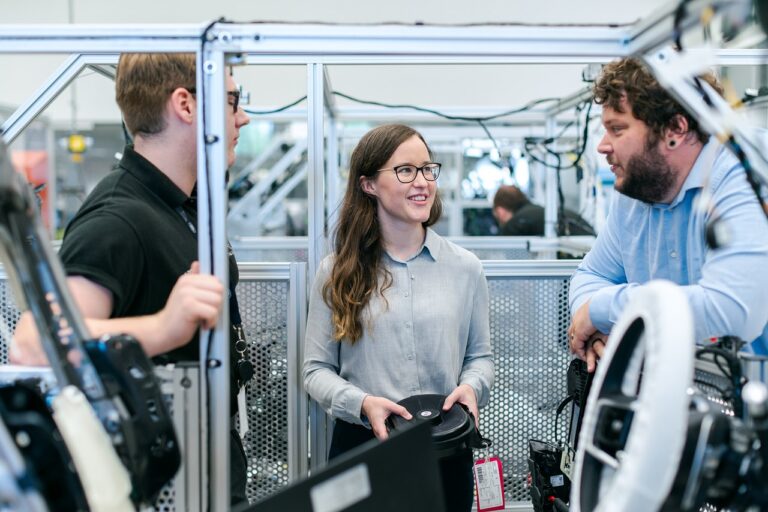
Engineers working on advanced manufacturing systems for defence innovation - InnoFund - R&D Tax & Innovation Funding
Simba Mareverwa, Head of Compliance and Tax Disputes at InnoFund - InnoFund - R&D Tax & Innovation Funding
Cedr Logo logo - InnoFund - R&D Tax & Innovation Funding
Icaew Charteredaccountant Logo logo - InnoFund - R&D Tax & Innovation Funding

Simba Mareverwa

Head Of Compliance & Tax Disputes

A note from Simba Mareverwa

Automotive R&D Claims Need Clear Technical Evidence

Automotive projects can look commercially straightforward from the outside, but the technical work behind them is often complex. A company may be trying to reduce weight, improve durability, increase efficiency, integrate electronics, solve thermal issues, improve safety or develop a new production method, and each of those challenges can involve genuine technical uncertainty.

HMRC will not accept a claim simply because a product is new, high-performance or innovative in a general sense. The claim needs to explain what advance was being sought, why existing knowledge or standard engineering methods were not enough, and what systematic development work was carried out to resolve the uncertainty.

Simba Mareverwa, InnoFund’s Head of Compliance and Tax Disputes, provides the compliance-led review. His role is to ensure automotive R&D claims are built around clear technical evidence, eligible activity and a defensible methodology, rather than broad claims about innovation or product improvement.

Qualifying R&D

How Automotive Companies Can Qualify for R&D Tax Credits

Automotive companies may qualify for R&D Tax Credits where they are seeking an advance in science or technology and have to overcome technical uncertainty. Qualifying activity can arise across vehicle systems, components, materials, software, manufacturing processes and testing environments.

Electric Vehicle and Battery Development

R&D may arise where a business is developing or improving electric vehicle systems, battery performance, charging efficiency, power management or energy storage. This could include work to improve range, safety, thermal behaviour, degradation, integration or performance under demanding conditions.

Lightweight Materials and Component Design

Automotive companies may qualify where they are developing new components or adapting materials to reduce weight while maintaining strength, durability, safety or cost-efficiency. This may involve testing composites, alloys, polymers or new design methods where the outcome is technically uncertain.

Emissions Reduction and Efficiency Improvements

Projects may qualify where a business is developing new ways to reduce emissions, improve fuel efficiency, optimise powertrains or reduce energy loss. The R&D sits in the technical uncertainty around how to achieve the required performance without compromising reliability, safety or compliance.

Vehicle Safety and Control Systems

R&D can arise where a business is developing or improving braking systems, stability control, driver assistance, collision avoidance, monitoring systems or safety-critical electronics. Qualifying work may involve testing, modelling, integration or validation where standard solutions do not meet the technical requirements.

Advanced Manufacturing and Production Processes

Automotive R&D may occur where a company is developing new production methods, tooling, automation, assembly processes or quality control systems. This may include solving uncertainty around repeatability, tolerances, material behaviour, production speed, waste reduction or manufacturing defects.

Connected, Autonomous and Software-Driven Vehicles

Software, sensors, data systems and connected vehicle technologies can qualify where the business is developing or adapting systems to solve technical problems. This may include work on diagnostics, telematics, autonomous functions, embedded software, machine learning, sensor fusion or real-time vehicle data processing.

Testimonials

What our clients have to say about InnoFund

  • Knowledgeable and easy to work with!

    We've worked with InnoFund for a few years now and it's been generally very positive. They've helped us with R&D claims and their knowledge and experience has been essential. Most of our contact has been with Ardy, Fatima and Libby who have been great. Highly recommended.

    DA
    David Aitken

  • Would recommend them to any company

    We have worked with InnoFund over the last few years to prepare & submit our R&D claim. They have guided us professionally through all stages of the process. I would recommend them to any company looking to secure R&D tax relief.

    G
    Gary

Non-Qualifying Work

Not Every Automotive Project Qualifies for R&D Tax Credits.

Not every automotive project, product update or operational improvement will qualify for R&D Tax Credits. The key question is whether the business faced scientific or technological uncertainty and carried out systematic work to resolve it.

Examples of work that may not qualify include:

  • Routine vehicle servicing
  • Standard product customisation
  • Normal component replacement
  • Off-the-shelf software setup
  • Basic CAD design work
  • Routine manufacturing changes
  • Standard compliance testing
  • Cosmetic design updates
  • Commercial product launches
  • General market research
  • Normal quality control
  • Work after uncertainty is resolved

Automotive projects often contain a mixture of qualifying and non-qualifying activity. InnoFund helps separate routine engineering from genuine R&D so the claim is accurate, compliant and defensible.

Why Us

Eligible R&D Costs for Automotive Businesses

Automotive businesses may be able to claim relief on qualifying costs linked to eligible R&D projects, including:

  • Engineering staff time
  • Design and technical staff time
  • Employer NIC and pension costs
  • Subcontracted R&D, where eligible
  • Externally provided workers
  • Software used for modelling or testing
  • Cloud computing and data costs
  • Prototype materials and components
  • Testing and validation costs
  • Consumables used in R&D
  • Trial production costs, where eligible
  • Technical consultancy costs, where eligible

The treatment of prototype materials, trial production costs, subcontracted work, externally provided workers, software and technical consultancy can be particularly important in automotive R&D claims.

InnoFund helps identify which costs are eligible and ensures the claim is built around the qualifying technical work, not just the wider commercial project.

HMRC Risk Areas for Automotive R&D Claims

HMRC is applying greater scrutiny to R&D Tax Credit claims, including claims from engineering, manufacturing and automotive businesses. A strong claim must explain the technical uncertainty clearly and show why the work went beyond routine product development or commercial improvement.

Common risk areas include:

  • Claiming routine engineering as R&D
  • Weak technical uncertainty explanation
  • No clear baseline of existing knowledge
  • Overclaiming standard product development
  • Including cosmetic or commercial changes
  • Poor testing and iteration records
  • Incorrect subcontractor treatment
  • Claiming standard compliance work
  • No competent professional input
  • Failing to separate qualifying and non-qualifying activity
  • Generic innovation language
  • Unclear project boundaries

InnoFund helps automotive businesses prepare claims that are clear, compliant and evidence-led. We focus on the technical work behind the project, the uncertainty faced, the process followed and the costs directly connected to the qualifying activity.

Frequently Asked Questions

Can automotive companies claim R&D Tax Credits?

Yes. Automotive companies can claim R&D Tax Credits where they are seeking an advance in science or technology and have to overcome technical uncertainty. This may include work involving electric vehicles, battery systems, components, materials, emissions, safety systems, manufacturing processes, software or connected vehicle technology.

Electric vehicle development may qualify where the business is solving technical problems around battery performance, charging, range, power management, thermal behaviour, safety or system integration. Routine installation or use of known EV technology is unlikely to qualify on its own.

Yes. Component design can qualify where the business is developing or improving parts in a way that involves technical uncertainty. This may include work on strength, weight, durability, thermal performance, reliability, safety or manufacturability.

Motorsport engineering may qualify where the business is developing new or improved technologies and overcoming technical uncertainty. This could include work on aerodynamics, materials, powertrain performance, cooling, telemetry, control systems or specialist components.

Yes. A project does not need to succeed to qualify. If the company carried out systematic work to resolve scientific or technological uncertainty, failed prototypes, tests or design iterations can still support an R&D claim.

Useful evidence may include design files, CAD models, test results, simulation outputs, prototype records, engineering notes, materials analysis, production trial data, software logs, meeting notes, photographs, supplier correspondence and explanations from the competent professionals involved.

Other Innovation Funding Services

Take a look at what else our industry-leading innovation funding experts can do for your business.

Patent Box

Reduce Corporation Tax on profits from qualifying patented innovations.

Land Remediation

Claim tax relief for cleaning up contaminated or derelict land.

HMRC Enquiries

Specialist support to defend tax relief claims when HMRC raises questions.

Why Us

Don't guess.
Know for sure.

Got a project you want to discuss? InnoFund helps separate routine delivery from genuine R&D so that claims are accurate, compliant and properly evidenced. Speak to our innovation funding experts today.

£300M
Tax benefits secured for our clients
1%
HMRC enquiry rate
99%
HMRC enquiries defended in the last two years
£162,000
Average UK R&D claim value
InnoFund adviser supporting UK businesses with R&D tax relief and innovation funding - InnoFund - R&D Tax & Innovation Funding
Scroll to Top